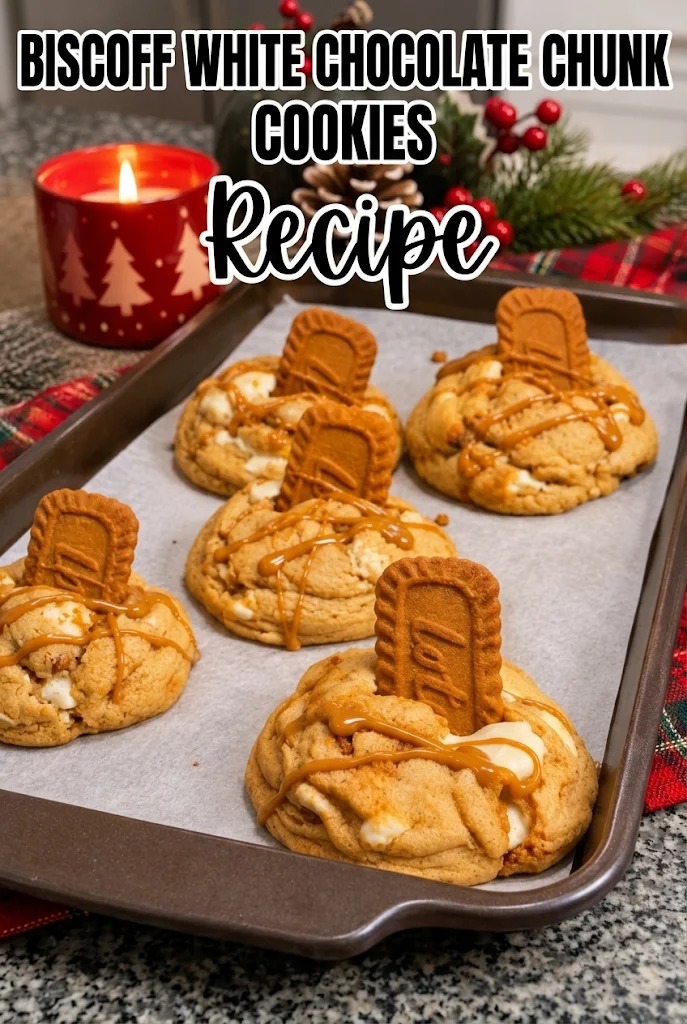
Biscoff White Chocolate Chunk Cookies
These cookies combine the warm spice and caramel notes of Biscoff with creamy white chocolate and a whole Biscoff cookie pressed into the center. The result is a chunky, indulgent cookie with layers of flavor and texture—crispy edges, chewy centers, and that signature Biscoff sweetness throughout. They’re straightforward to make and deliver bakery-quality results in about 30 minutes total.
Ingredients
- Softened butter
- Sugars
- Biscoff cookie butter
- Eggs
- Vanilla
- Dry ingredients (flour, baking soda, salt)
- White chocolate chunks
- Crushed Biscoff
- Whole Biscoff cookies
- Melted Biscoff spread
How These Cookies Come Together
The foundation starts with softened butter creamed together with sugars and Biscoff cookie butter. Creaming—beating the mixture for a few minutes until it’s light and fluffy—traps air into the fat and sugar, which gives the cookies lift and a tender crumb. Softened butter (not melted) is essential; if it’s too cold, it won’t incorporate smoothly, and if it’s too warm, the dough becomes greasy and spreads too much during baking.
Biscoff cookie butter adds moisture and that distinctive caramel-spice flavor. Once you beat in eggs and vanilla, the mixture may look slightly broken or curdled—that’s normal. The dry ingredients bring it together into a cohesive dough.
White chocolate chunks and crushed Biscoff are folded in gently after the dry ingredients. Folding rather than stirring keeps the dough tender and prevents overdeveloping gluten, which would make the cookies tough. The white chocolate melts slightly during baking, creating pockets of creaminess, while the crushed Biscoff adds texture and reinforces the cookie flavor.
Whole Biscoff cookies pressed into each dough mound before baking serve two purposes: they anchor the center and provide a visual and textural focal point. The melted Biscoff spread drizzled over the warm cookies immediately after baking adds a glossy finish and an extra layer of caramel-spice flavor that soaks slightly into the soft surface.
How to Make It
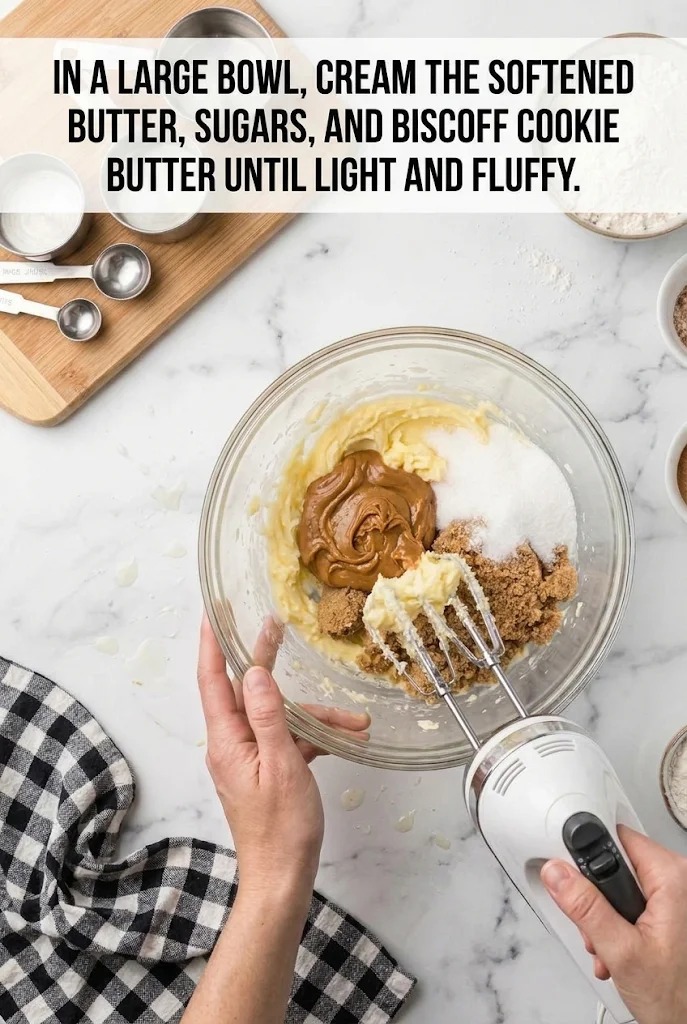
- In a large bowl, cream the softened butter, sugars, and biscoff cookie butter until light and fluffy.

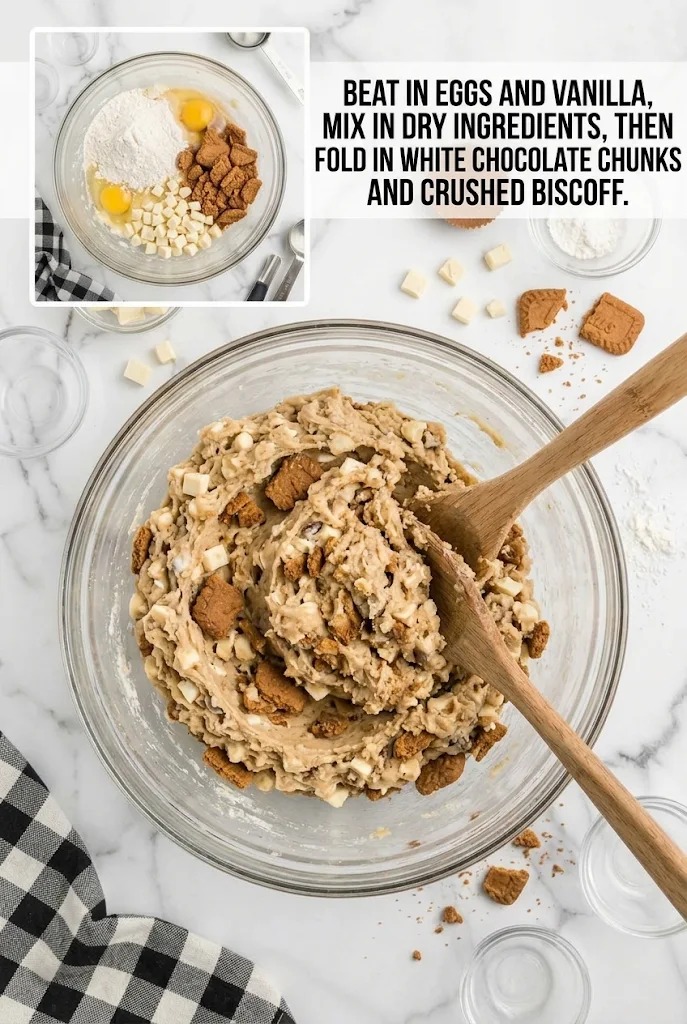
- Beat in eggs and vanilla, mix in dry ingredients, then fold in white chocolate chunks and crushed biscoff.
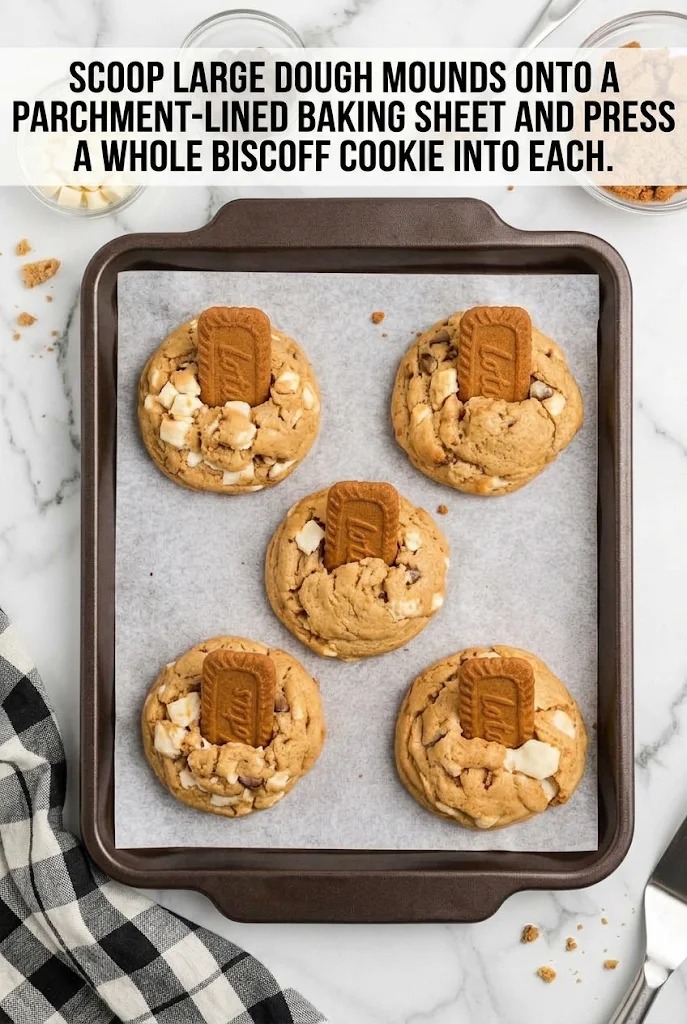
- Scoop large dough mounds onto a parchment-lined baking sheet and press a whole biscoff cookie into each.
- Bake at 350°F for 10-12 minutes until golden. Drizzle warm cookies with melted biscoff spread and serve.


Preparing Your Workspace
Line your baking sheet with parchment paper before you start mixing. Parchment prevents sticking and ensures even browning on the bottom of the cookies. Have all your ingredients measured and ready so you can work smoothly through the mixing steps without stopping to measure.
Position your oven rack in the center and preheat to 350°F. This temperature is moderate enough to allow the cookies to bake through without burning the edges, and it gives you a window of 10–12 minutes to achieve golden color without overdrying the centers.
Creaming and Mixing
In a large bowl, cream the softened butter, sugars, and Biscoff cookie butter together. If you’re using an electric mixer, beat on medium speed for 2–3 minutes until the mixture is light, fluffy, and pale. You should see a noticeable increase in volume and a change in color. This creaming step is where the cookies get their tender crumb and slight lift. If you’re mixing by hand with a whisk, aim for at least 3–4 minutes of vigorous whisking.
Beat in the eggs one at a time, then add the vanilla. Mix until each egg is fully incorporated before adding the next. Once you add the dry ingredients, the mixture will come together.
Add the dry ingredients—flour, baking soda, and salt—and mix on low speed or by hand until just combined. Overmixing at this stage develops gluten, which makes cookies tough and dense. You want a soft, cohesive dough.
Fold in the white chocolate chunks and crushed Biscoff by hand using a spatula or wooden spoon. Distribute the chunks and crushed cookies evenly throughout so each cookie gets a good mix of both.
Scooping and Pressing
Scoop large dough mounds onto your parchment-lined baking sheet using a cookie scoop or a large spoon. These cookies spread during baking, so space them about 2 inches apart. The recipe yields 24 cookies, so plan your baking sheet layout accordingly—you may need to bake in batches or use two sheets.
Press a whole Biscoff cookie firmly into the center of each dough mound. Push it down so it’s partially embedded in the dough; it should stay in place during baking and become part of the finished cookie rather than sitting on top.
Baking
Bake at 350°F for 10–12 minutes. The cookies are done when the edges are golden and the centers still look slightly underbaked—they should appear soft in the middle. The cookies continue to cook on the hot baking sheet after you remove them from the oven, so pulling them out a minute or two before they look fully set ensures a chewy center and crispy edges.
Watch the cookies during the last few minutes of baking. Oven temperatures vary, and some run hot. If the edges are browning too quickly, reduce the temperature by 25°F and add a minute or two to the baking time.
Finishing with the Drizzle
While the cookies are still warm, drizzle melted Biscoff spread over each one. The warm surface absorbs some of the spread, creating a glossy finish and an extra layer of flavor. If the Biscoff spread is too thick to drizzle, warm it gently in a small bowl—either over a pot of simmering water or in short bursts in the microwave—until it reaches a pourable consistency.
Let the cookies cool on the baking sheet for a few minutes before transferring them to a wire rack or serving plate. This brief resting time allows them to set slightly so they hold together when moved.
Texture and Flavor
These cookies have multiple layers of texture: the crispy, caramelized edges from the sugar and Biscoff spread, the chewy center from the underbaked dough, the creamy pockets of white chocolate, and the crunch of crushed Biscoff throughout. The whole Biscoff cookie in the center provides a focal point of texture and flavor.
The flavor profile is warm and sweet, with caramel and spice from the Biscoff, vanilla undertones, and creamy white chocolate. The white chocolate doesn’t overpower; instead, it balances the intensity of the Biscoff and adds richness.
Recipe Notes
- Parchment paper prevents sticking and ensures even browning on the baking sheet.
- Press whole Biscoff cookies into dough before baking for structural integrity and flavor accent.
- Drizzle warm cookies immediately after removing from oven while surface is still soft enough to absorb the spread.
- Large dough mounds will spread during baking; space them 2 inches apart on the baking sheet.
Practical Tips
If your dough feels too soft or sticky after folding in the chunks, refrigerate it for 15–20 minutes before scooping. This makes the dough easier to handle and helps the cookies hold their shape better during baking.
Biscoff spread varies in thickness depending on the brand and temperature. If yours is very thick at room temperature, warm it slightly before drizzling so it flows easily over the warm cookies.
These cookies are best served warm or at room temperature the same day they’re baked. The combination of crispy edges, chewy centers, and the soft Biscoff spread on top is most pronounced when fresh.
Total time from start to serving is about 30 minutes: 15 minutes of prep and mixing, 12 minutes of baking, and a few minutes for cooling and drizzling.
BISCOFF WHITE CHOCOLATE CHUNK COOKIES
Ingredients
Equipment
Method
- In a large bowl, cream the softened butter, sugars, and biscoff cookie butter until light and fluffy.
- Beat in eggs and vanilla, mix in dry ingredients, then fold in white chocolate chunks and crushed biscoff.
- Scoop large dough mounds onto a parchment-lined baking sheet and press a whole biscoff cookie into each.
- Bake at 350°F for 10-12 minutes until golden. Drizzle warm cookies with melted biscoff spread and serve.
Notes
Recipe tips
- Parchment paper prevents sticking and ensures even browning on the baking sheet.
- Press whole Biscoff cookies into dough before baking for structural integrity and flavor accent.
- Drizzle warm cookies immediately after removing from oven while surface is still soft enough to absorb the spread.
- Large dough mounds will spread during baking; space them 2 inches apart on the baking sheet.