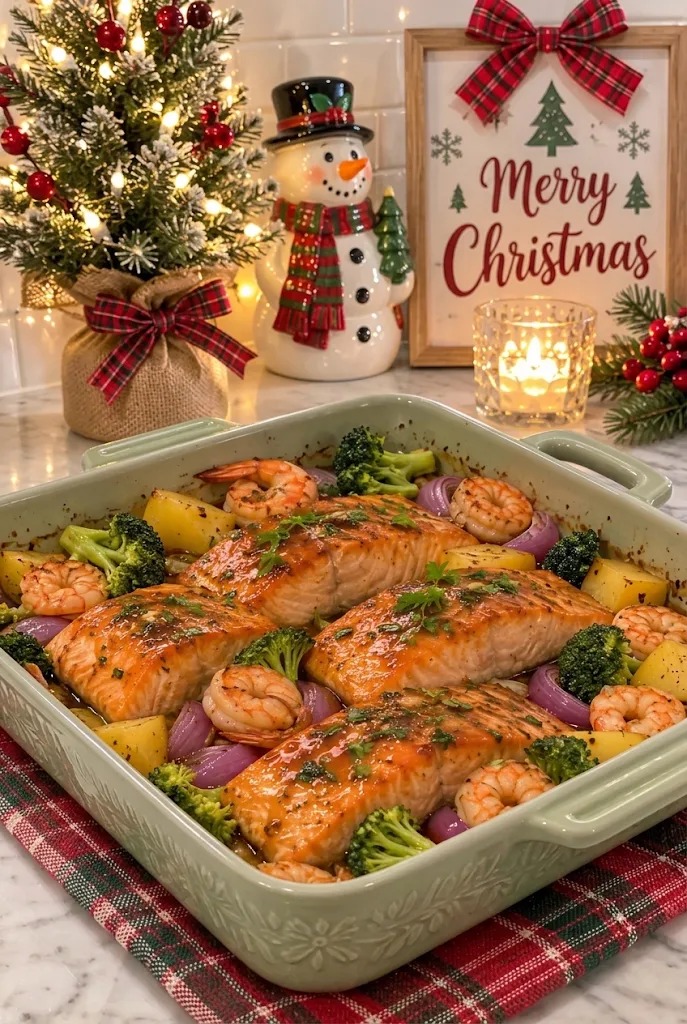
This honey garlic salmon and shrimp bake brings together seafood, broccoli, baby potatoes and red onion with a sweet and savory sauce. A sprinkle of fresh parsley finishes the dish.
The photos provide the ingredients and an oven temperature of 400°F. They do not specify the cooking time or whether the potatoes were precooked. The timing below is a proposed, untested method: it roasts the potatoes first so they can become tender before the seafood finishes cooking.
Ingredients
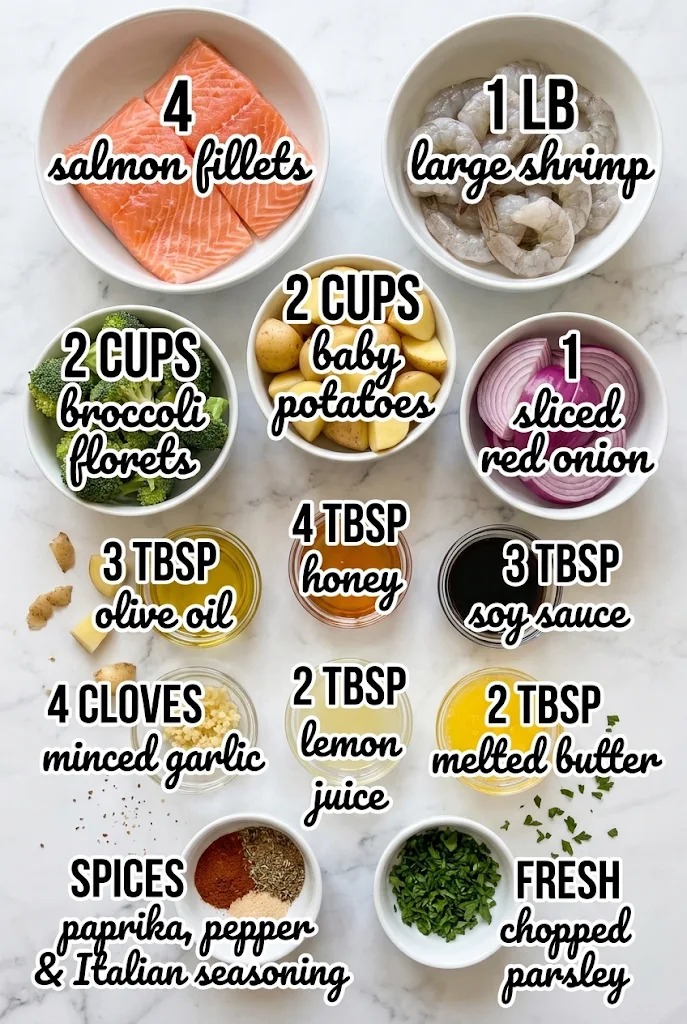
- 4 salmon fillets
- 1 LB large shrimp
- 2 CUPS broccoli florets
- 2 CUPS baby potatoes
- 1 sliced red onion
- 3 TBSP olive oil
- 4 TBSP honey
- 3 TBSP soy sauce
- 4 CLOVES minced garlic
- 2 TBSP lemon juice
- 2 TBSP melted butter
- paprika
- pepper
- Italian seasoning
- fresh chopped parsley
How to Make It
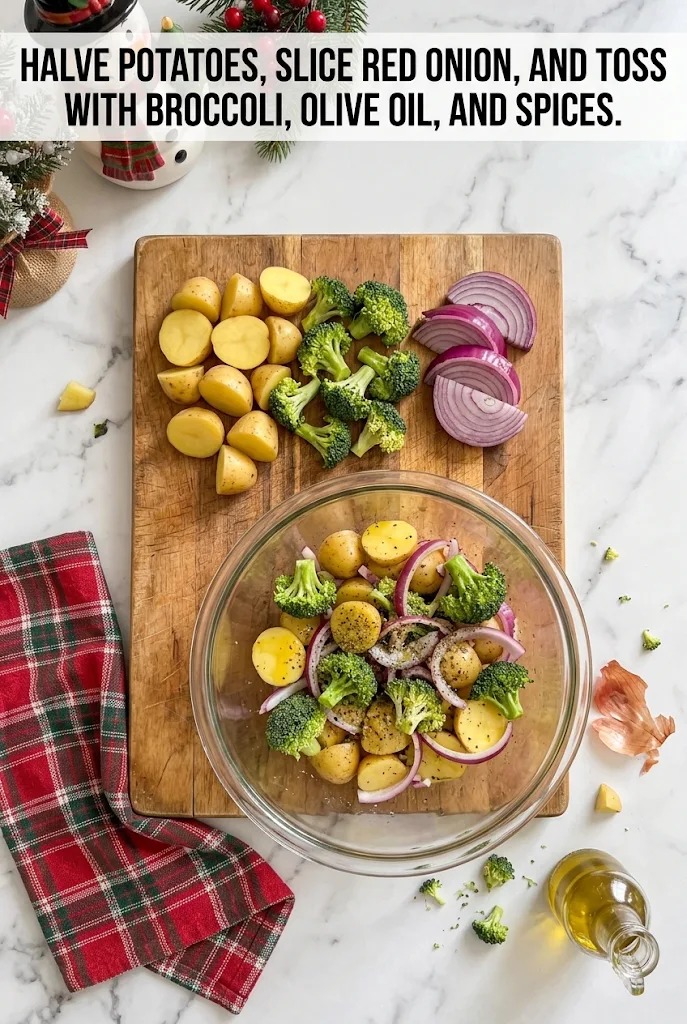
- Heat the oven to 400°F (200°C). Halve the baby potatoes, slice the onion, and cut the broccoli into florets. Toss the potatoes and onion with olive oil, paprika, pepper, and Italian seasoning.

- Roast the potatoes and onion in a baking dish for an estimated 20–25 minutes, until the potatoes are nearly tender. Add the broccoli and roast for about 5 minutes more.
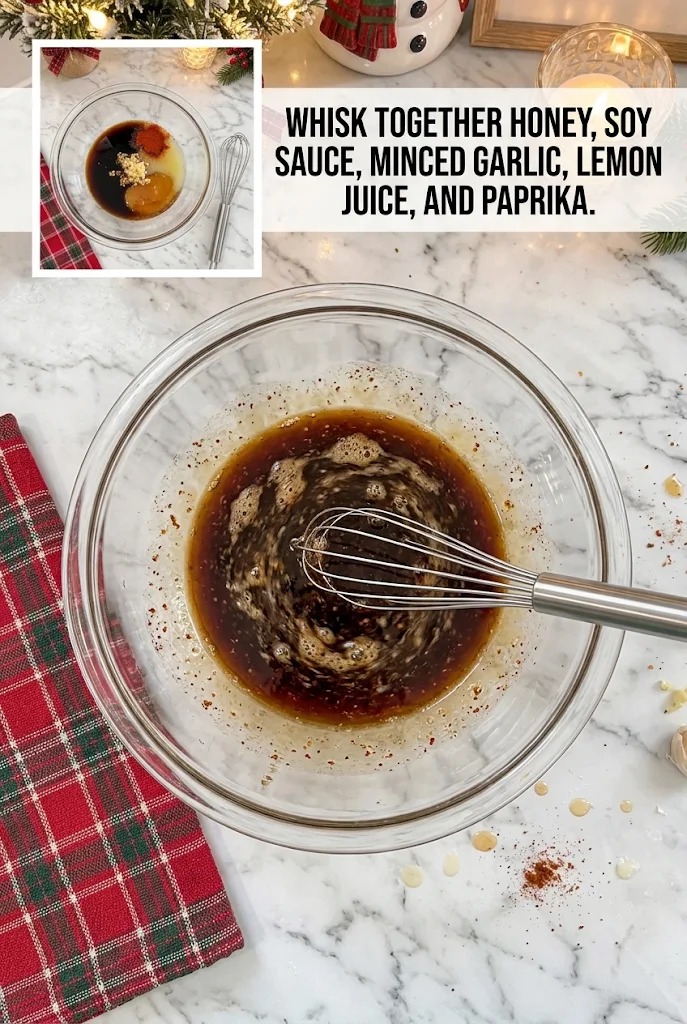
- Whisk together the honey, soy sauce, garlic, lemon juice, and paprika. Reserve some sauce in a clean bowl before it touches the raw seafood; mix the reserved portion with the melted butter for finishing.
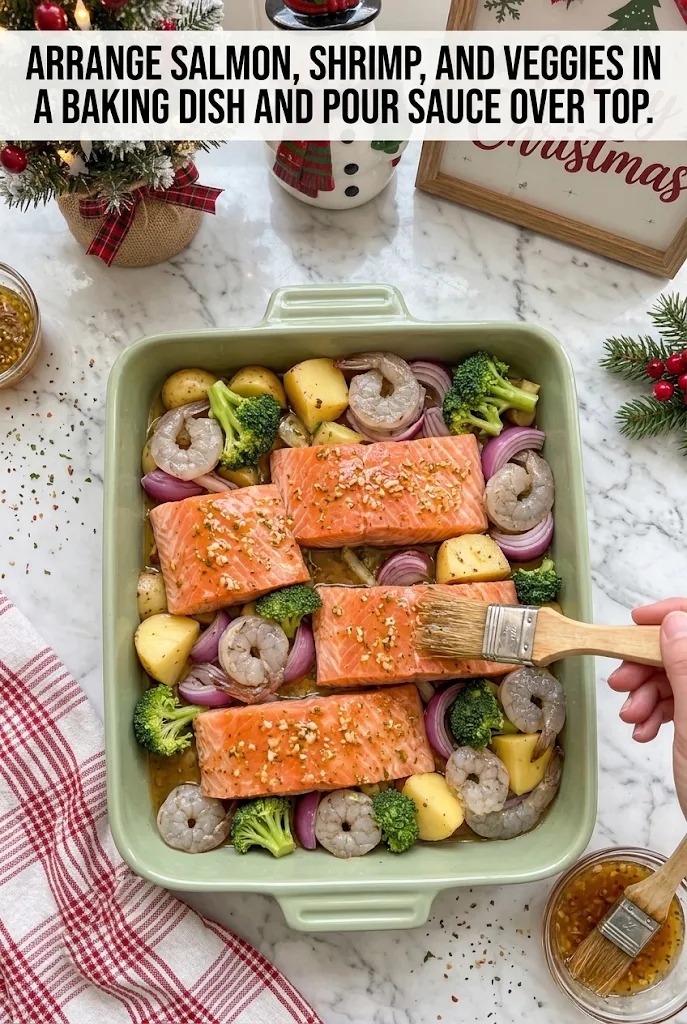
- Add the salmon and shrimp to the dish and coat with the remaining sauce. Bake for an estimated 12–18 minutes, checking the shrimp early and removing them when pearly and opaque. Cook the salmon to 145°F (63°C) and continue cooking the vegetables until tender.
- Brush the cooked seafood with the reserved honey-butter glaze using a clean brush. Garnish with parsley and serve.
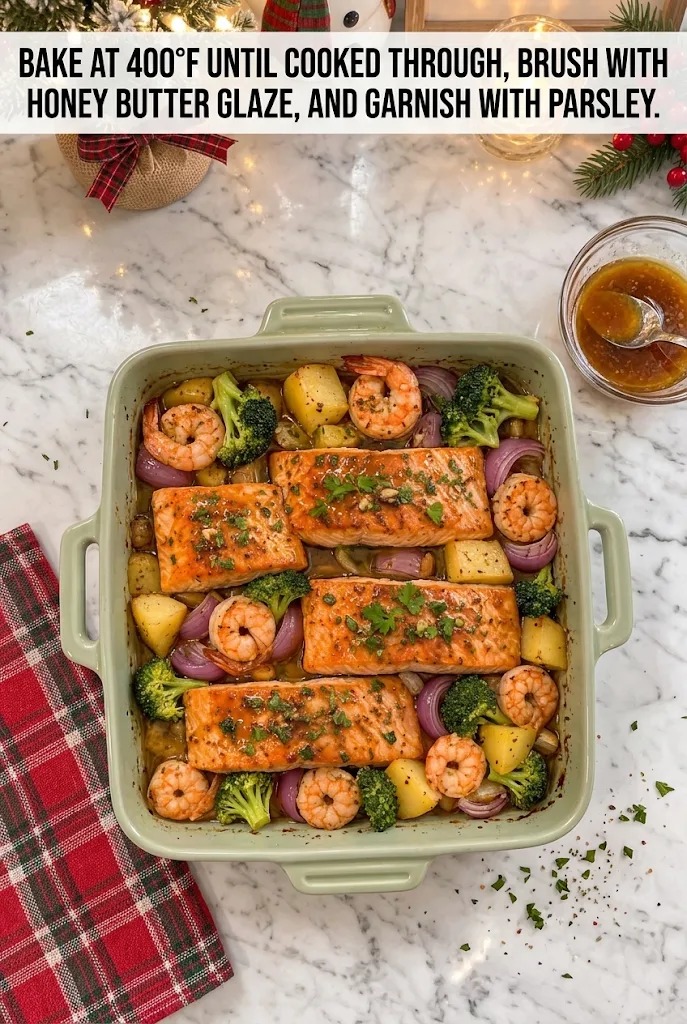
Recipe Notes
- The photos specify 400°F but not baking times. These times and the staged cooking sequence are untested estimates; use doneness checks.
- Salmon must reach 145°F (63°C); shrimp should be pearly and opaque throughout.
- Reserve the finishing sauce before it contacts raw seafood. Use a clean brush for cooked food.
- Do not give honey to children under one year old.
Preparing the vegetables
Cut the potatoes into similar-sized pieces so they cook at a similar pace. If some are much larger than the others, quarter them. Start the potatoes and onion first, and add the broccoli later to help it keep its texture. Check the potatoes with a fork before adding the seafood: they should be nearly tender. Oven temperatures, pan depth and the size of the potatoes can all change how long this takes.
Making the sauce
Whisk honey, soy sauce, garlic, lemon juice and paprika in a bowl. Before the sauce touches the raw salmon or shrimp, transfer a portion to a separate clean bowl and combine it with the melted butter. Keep that portion for the final glaze. The remaining sauce can go over the uncooked seafood before baking.
Checking the seafood
Salmon fillet thickness and shrimp size affect cooking time. Begin checking early and remove the shrimp when their flesh is pearly and opaque. Check the thickest part of the salmon with a food thermometer; the FDA recommends 145°F (63°C) for finfish. If the fish is done before the potatoes are tender, transfer the seafood to a clean serving plate and return the vegetables to the oven until ready.
Use a clean brush to apply the reserved glaze to the cooked seafood. Do not brush cooked food with a utensil that has touched raw seafood. For more information see the FDA safe food handling guide.
Serving ideas
Serve the salmon and shrimp with the potatoes, broccoli and onion from the baking dish. Add the chopped parsley just before serving. The honey and soy sauce make this a flavorful meal on its own; lemon wedges can add a little brightness at the table.
Questions
Can I use different vegetables? You can choose vegetables you enjoy, but adjust their cooking time for their size and texture. Check each vegetable for tenderness before serving.
How many does this serve? Four servings are an estimate based on the four salmon fillets. Portions will vary with the size of the fillets and appetites.
Getting organized before cooking
Gather a baking dish, two small bowls, a whisk, a clean brush, and a food thermometer before you begin. Wash the broccoli and potatoes under running water and dry them before cutting. Peel and slice the onion, then mince the garlic. Keeping the pieces roughly uniform helps each ingredient cook more evenly. The quantities in the ingredient list come from the supplied recipe photograph; seasoning amounts were not specified, so add the paprika, pepper and Italian seasoning to taste.
Keep the raw salmon and shrimp refrigerated until you are ready to add them to the dish. Use separate utensils and cutting surfaces for raw seafood and the vegetables. Wash your hands and any tools that contact the seafood with soap and water before handling cooked food or serving plates.
Adjusting for your oven
The staged method is a starting point rather than a tested promise of an exact baking time. A crowded dish can take longer, and large potatoes need more time than small pieces. Check the potatoes with a fork: if they are still firm in the middle, continue roasting before adding the seafood. Similarly, thin salmon fillets can cook faster than thick ones. Check the thickest part of each fillet, and avoid using color alone as the only test for fish.
If the shrimp become opaque while the salmon needs more time, transfer the shrimp to a clean plate and finish cooking the salmon. Put the shrimp back with the finished dish for serving. This makes it easier to avoid tough shrimp while ensuring the fish and vegetables are cooked.
Using the glaze
The ingredient photo lists honey and melted butter separately. The finishing glaze here uses part of the measured honey sauce mixed with the listed butter; it does not require an extra amount of honey. Set that portion aside before the remaining sauce comes into contact with the raw fish. Spread the reserved glaze with a clean brush after cooking, then add parsley. If you prefer less sweetness, serve the reserved glaze on the side and let everyone add their own.
Leftovers
Refrigerate leftovers promptly in a covered container. Reheat leftovers thoroughly to 165°F (74°C), and use a food thermometer to check. Fish and shrimp can dry out during reheating, so heat gently and check frequently. Discard food that has been left out too long, following the FDA’s safe handling guidance linked above.
Honey Garlic Salmon and Shrimp Bake
Ingredients
Equipment
Method
- Heat the oven to 400°F (200°C). Halve the baby potatoes, slice the onion, and cut the broccoli into florets. Toss the potatoes and onion with olive oil, paprika, pepper, and Italian seasoning.
- Roast the potatoes and onion in a baking dish for an estimated 20–25 minutes, until the potatoes are nearly tender. Add the broccoli and roast for about 5 minutes more.
- Whisk together the honey, soy sauce, garlic, lemon juice, and paprika. Reserve some sauce in a clean bowl before it touches the raw seafood; mix the reserved portion with the melted butter for finishing.
- Add the salmon and shrimp to the dish and coat with the remaining sauce. Bake for an estimated 12–18 minutes, checking the shrimp early and removing them when pearly and opaque. Cook the salmon to 145°F (63°C) and continue cooking the vegetables until tender.
- Brush the cooked seafood with the reserved honey-butter glaze using a clean brush. Garnish with parsley and serve.
Notes
Recipe tips
- The photos specify 400°F but not baking times. These times and the staged cooking sequence are untested estimates; use doneness checks.
- Salmon must reach 145°F (63°C); shrimp should be pearly and opaque throughout.
- Reserve the finishing sauce before it contacts raw seafood. Use a clean brush for cooked food.
- Do not give honey to children under one year old.