Chocolate Peanut Butter Marble Bundt Cake
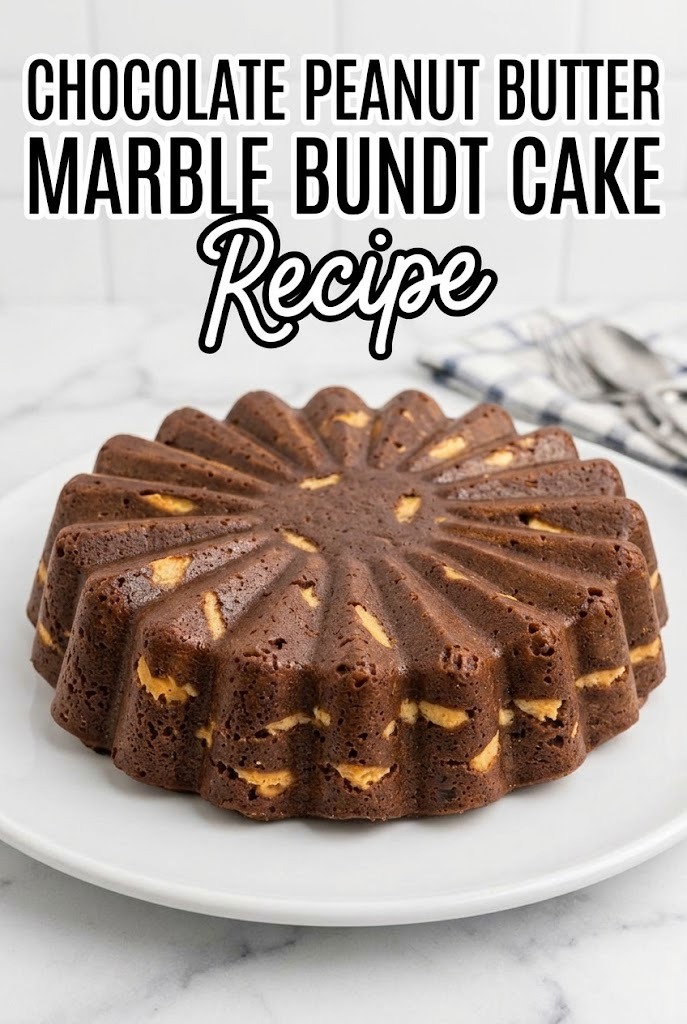
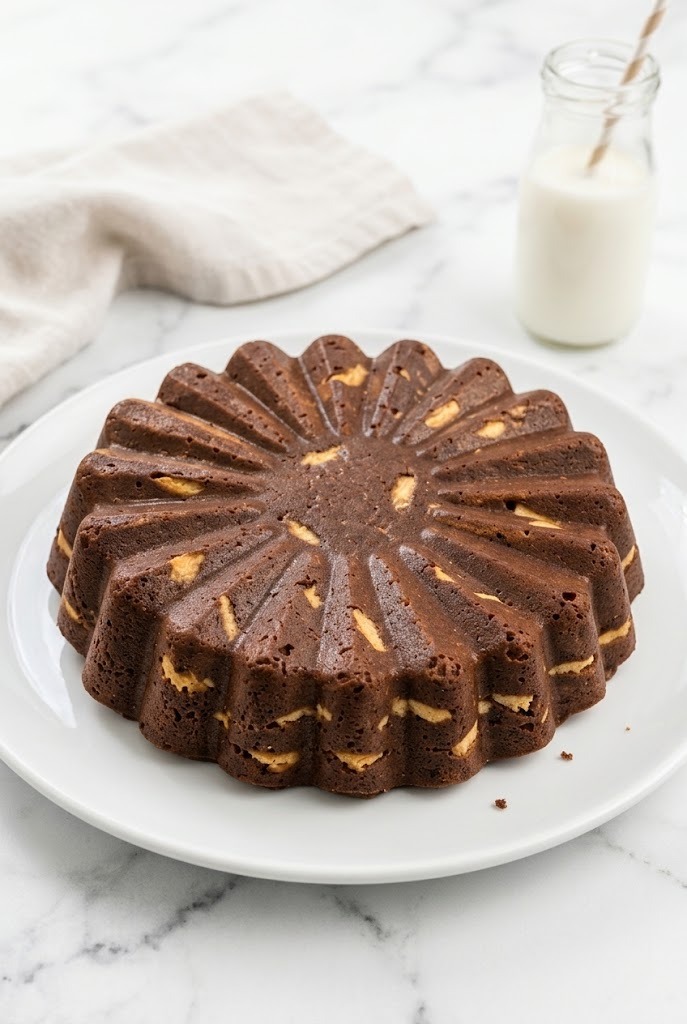
This chocolate peanut butter marble bundt cake combines two classic flavors in one striking presentation. A cocoa-based batter swirled with smooth peanut butter filling creates those distinctive ribbons when you slice into it. The result is moist and flavorful, and it feeds a crowd without requiring advanced techniques or fussy steps.
The beauty of a marble cake is simplicity: you’re working with two components—a chocolate batter and a peanut butter mixture—layered and swirled together before baking. The visual impact looks more impressive than the effort required to make it.
About the Ingredients
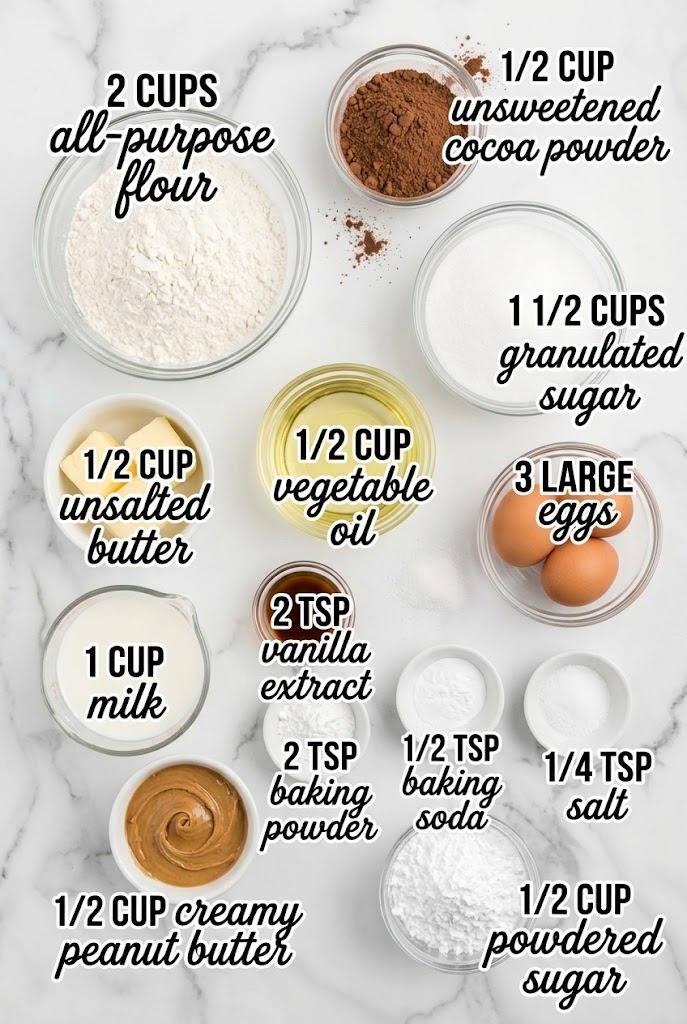
The dry base starts with all-purpose flour, unsweetened cocoa powder, baking powder, baking soda, and salt. These work together to give the cake its structure and chocolate flavor. Since the cocoa powder is unsweetened, the sweetness comes entirely from granulated sugar mixed into the batter.
For the wet ingredients, you’ll use softened unsalted butter, vegetable oil, and granulated sugar beaten together. This mixture creates a tender crumb. Three large eggs bind everything and add richness, while milk keeps the batter moist and helps it bake evenly. Vanilla extract adds depth without overpowering the chocolate and peanut butter.
The peanut butter filling is simply creamy peanut butter mixed with powdered sugar until smooth. This creates a thick, spreadable consistency that won’t sink during baking. The powdered sugar dissolves into the peanut butter, creating a filling that’s sweet but not grainy.
Ingredients
- 2 CUPS all-purpose flour
- 1/2 CUP unsweetened cocoa powder
- 1 1/2 CUPS granulated sugar
- 1/2 CUP unsalted butter
- 1/2 CUP vegetable oil
- 3 LARGE eggs
- 1 CUP milk
- 2 TSP vanilla extract
- 2 TSP baking powder
- 1/2 TSP baking soda
- 1/4 TSP salt
- 1/2 CUP creamy peanut butter
- 1/2 CUP powdered sugar
Preparing the Pan and Oven
Start by preheating your oven to 350°F. While it heats, grease your 10-cup bundt pan thoroughly with butter or non-stick spray. Pay special attention to the center tube and all the ridges—a well-greased pan is essential for the cake to release cleanly after cooling. Any dry spots can cause sticking, which makes it difficult to invert the finished cake onto a plate.
Building the Batter
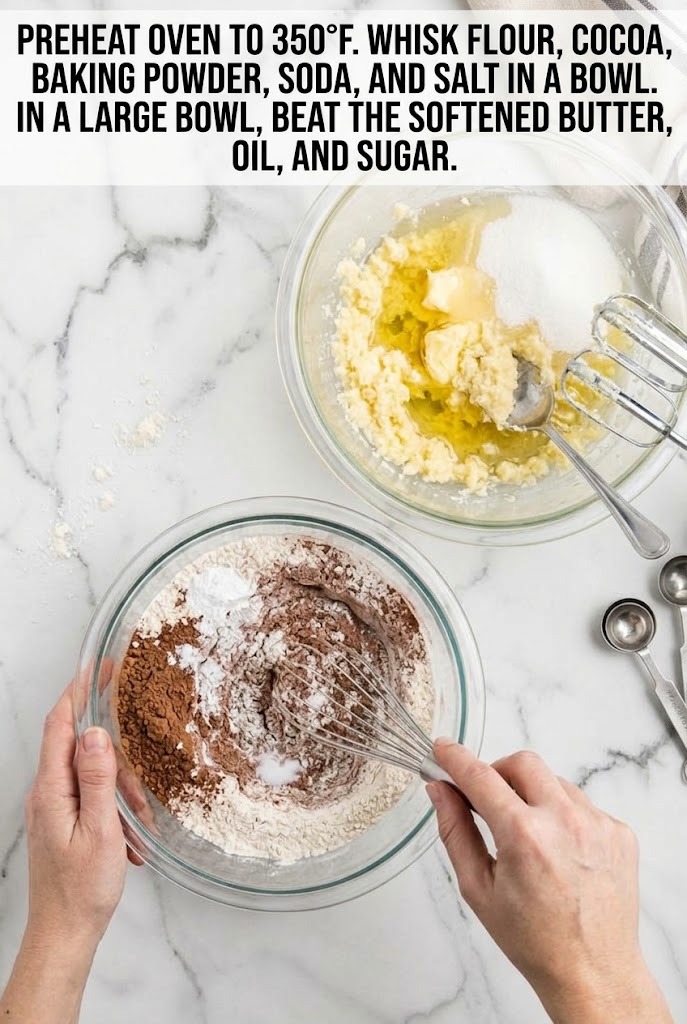
In one bowl, whisk together the flour, cocoa powder, baking powder, baking soda, and salt. This combines all the dry ingredients evenly so the leavening agents and salt distribute throughout the batter.
In a large mixing bowl, beat the softened butter, vegetable oil, and granulated sugar together. The oil adds moisture and tenderness to the crumb, while the butter contributes flavor. Beat until the mixture is combined and lighter in color.
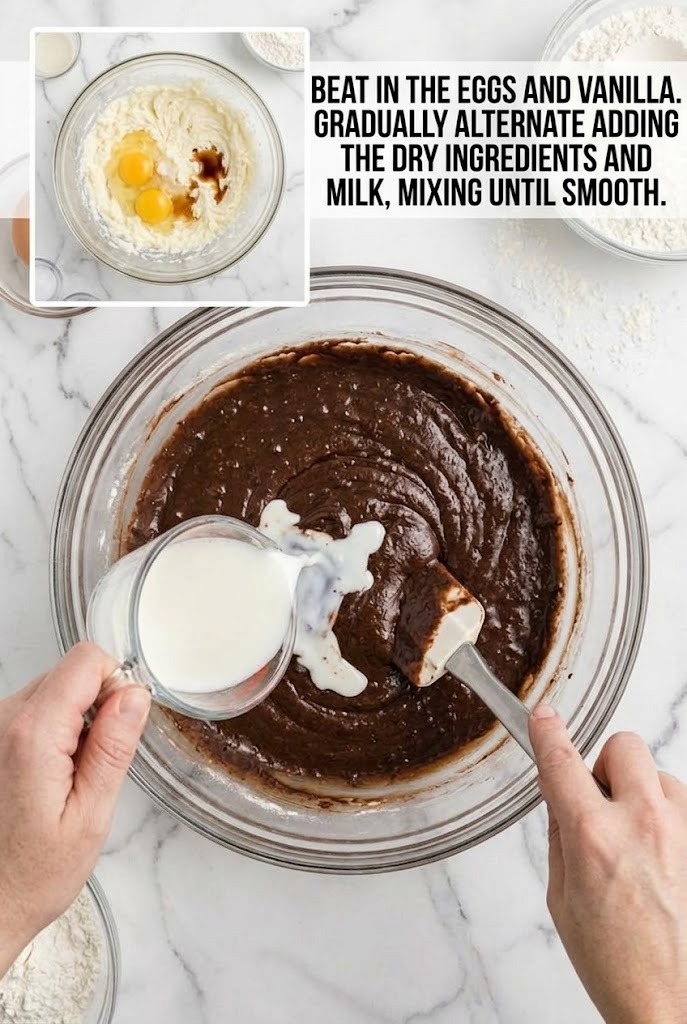
Add the eggs one at a time, beating after each addition. This incorporates air and helps emulsify the batter. Pour in the vanilla extract and mix until smooth.
Now alternate adding the dry ingredients and milk to the wet mixture. Start with about a third of the dry ingredients, mix until just combined, then add half the milk. Continue this pattern—dry, milk, dry, milk, dry—until everything is incorporated. Mix until smooth, but don’t overbeat once the flour is added, as this can toughen the cake.
How to Make It
- Preheat oven to 350°F. Whisk flour, cocoa, baking powder, soda, and salt in a bowl. In a large bowl, beat the softened butter, oil, and sugar.

- Beat in the eggs and vanilla. Gradually alternate adding the dry ingredients and milk, mixing until smooth.
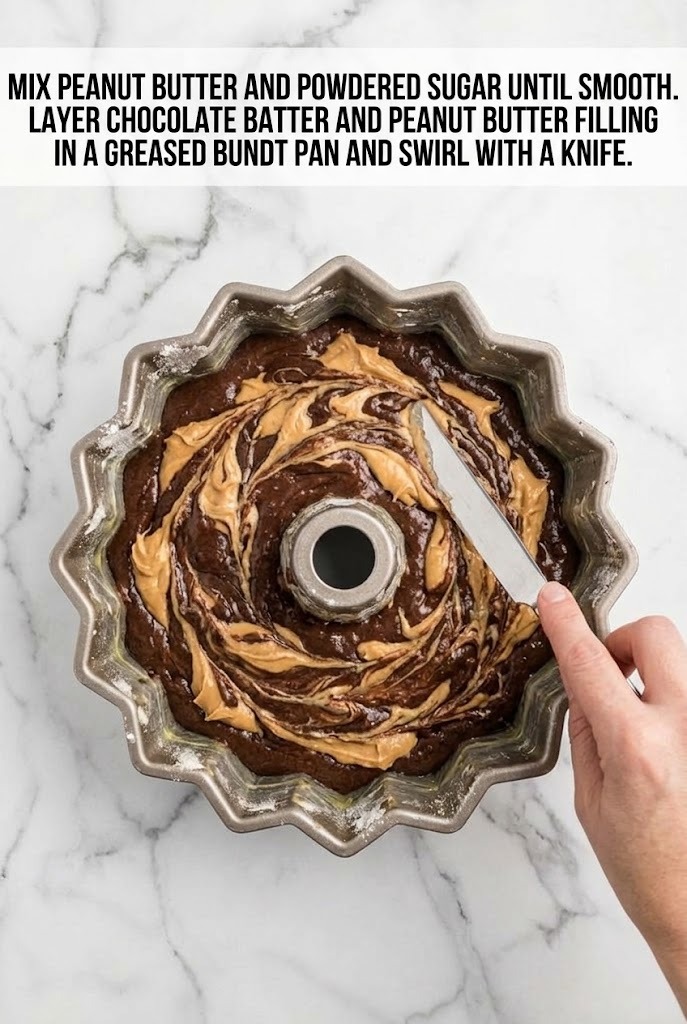
- Mix peanut butter and powdered sugar until smooth. Layer chocolate batter and peanut butter filling in a greased bundt pan and swirl with a knife.
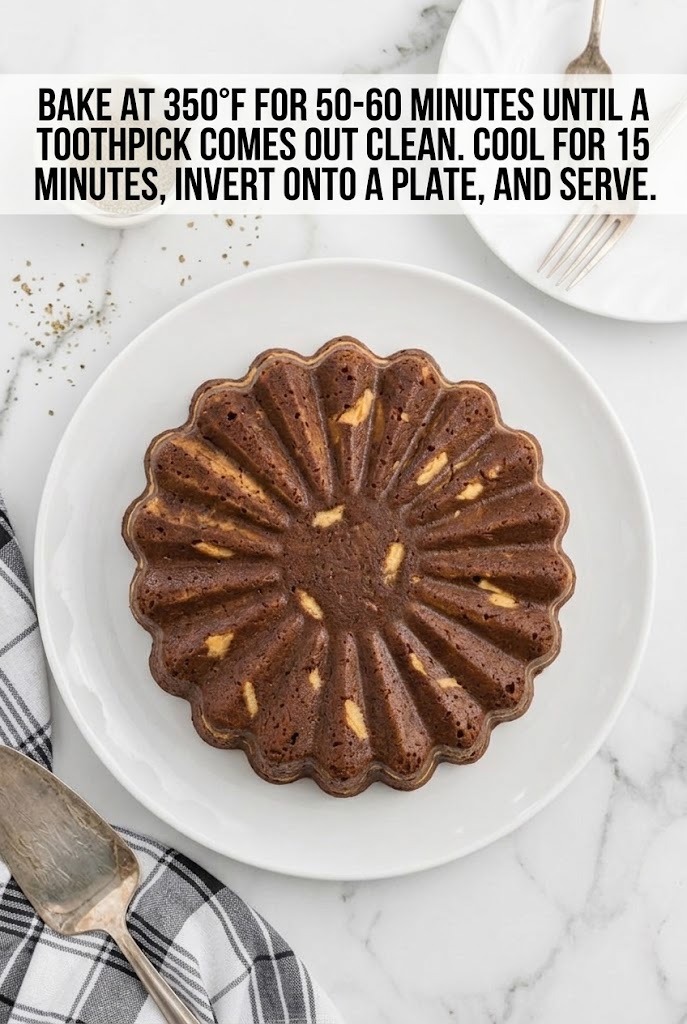
- Bake at 350°F for 50-60 minutes until a toothpick comes out clean. Cool for 15 minutes, invert onto a plate, and serve.
Recipe Notes
- Grease the bundt pan thoroughly with butter or non-stick spray to ensure clean release after cooling.
- When layering, alternate between chocolate batter and peanut butter mixture, then swirl gently with a knife to create the marble effect without over-mixing.
- A toothpick inserted in the thickest part of the cake should come out clean or with only a few moist crumbs; do not overbake.
- Allow the cake to cool in the pan for the full 15 minutes before inverting to prevent breaking.
Creating the Marble Effect
In a separate bowl, mix the creamy peanut butter and powdered sugar together until smooth. This filling should be thick enough to hold its shape when spooned but soft enough to swirl through the chocolate batter.
Pour about a third of the chocolate batter into the prepared bundt pan. Spoon about half of the peanut butter mixture over this layer in dollops, then add another third of the chocolate batter. Add the remaining peanut butter mixture, and finish with the last of the chocolate batter on top.
Take a knife and gently swirl it through the layers, creating the marble pattern. The key is to swirl without over-mixing—you want distinct ribbons of peanut butter running through the chocolate, not a completely blended batter. A few passes with the knife, moving from the center outward and then back toward the center, creates the classic marble look.
Baking and Cooling
Bake at 350°F for 50 to 60 minutes. The cake is done when a toothpick inserted in the thickest part comes out clean or with only a few moist crumbs. The exact time depends on your oven and how full the pan is, so start checking around 50 minutes.
Remove the cake from the oven and let it cool in the pan for 15 minutes. This resting time is important—it allows the cake to set enough to hold together when inverted, but it’s still warm enough to release cleanly from the pan. Cooling it completely in the pan can make it stick.
After 15 minutes, place a serving plate over the top of the bundt pan and carefully invert the cake onto the plate. If it doesn’t release immediately, gently tap the bottom of the pan or run a thin knife around the edges. The cake should slide out onto the plate in one piece.
Practical Tips for Success
The toothpick test is your guide to doneness. A toothpick that comes out completely clean means the cake is fully baked. One with a few moist crumbs is ideal—the cake will continue to set as it cools. If the toothpick comes out wet with batter, the cake needs more time.
If you’re concerned about the cake sticking, don’t skip the thorough greasing step. A bundt pan’s ridges and center tube are easy places for batter to catch. Some bakers prefer using a bundt cake release spray, which combines oil and flour for extra insurance.
The marble pattern is forgiving. Even if your swirls aren’t perfectly symmetrical, the cake will still look beautiful and taste delicious. The contrast between the chocolate and peanut butter is visible no matter how the swirls land.
This cake serves 12 people and takes about 75 minutes total from start to serving—20 minutes of prep and 55 minutes in the oven. It’s substantial enough for a dessert on its own, though a simple dusting of powdered sugar or a drizzle of chocolate glaze can add extra polish if you’d like.
CHOCOLATE PEANUT BUTTER MARBLE BUNDT CAKE
Ingredients
Equipment
Method
- Preheat oven to 350°F. Whisk flour, cocoa, baking powder, soda, and salt in a bowl. In a large bowl, beat the softened butter, oil, and sugar.
- Beat in the eggs and vanilla. Gradually alternate adding the dry ingredients and milk, mixing until smooth.
- Mix peanut butter and powdered sugar until smooth. Layer chocolate batter and peanut butter filling in a greased bundt pan and swirl with a knife.
- Bake at 350°F for 50-60 minutes until a toothpick comes out clean. Cool for 15 minutes, invert onto a plate, and serve.
Notes
Recipe tips
- Grease the bundt pan thoroughly with butter or non-stick spray to ensure clean release after cooling.
- When layering, alternate between chocolate batter and peanut butter mixture, then swirl gently with a knife to create the marble effect without over-mixing.
- A toothpick inserted in the thickest part of the cake should come out clean or with only a few moist crumbs; do not overbake.
- Allow the cake to cool in the pan for the full 15 minutes before inverting to prevent breaking.